

Two hundred landing pages nobody had to write
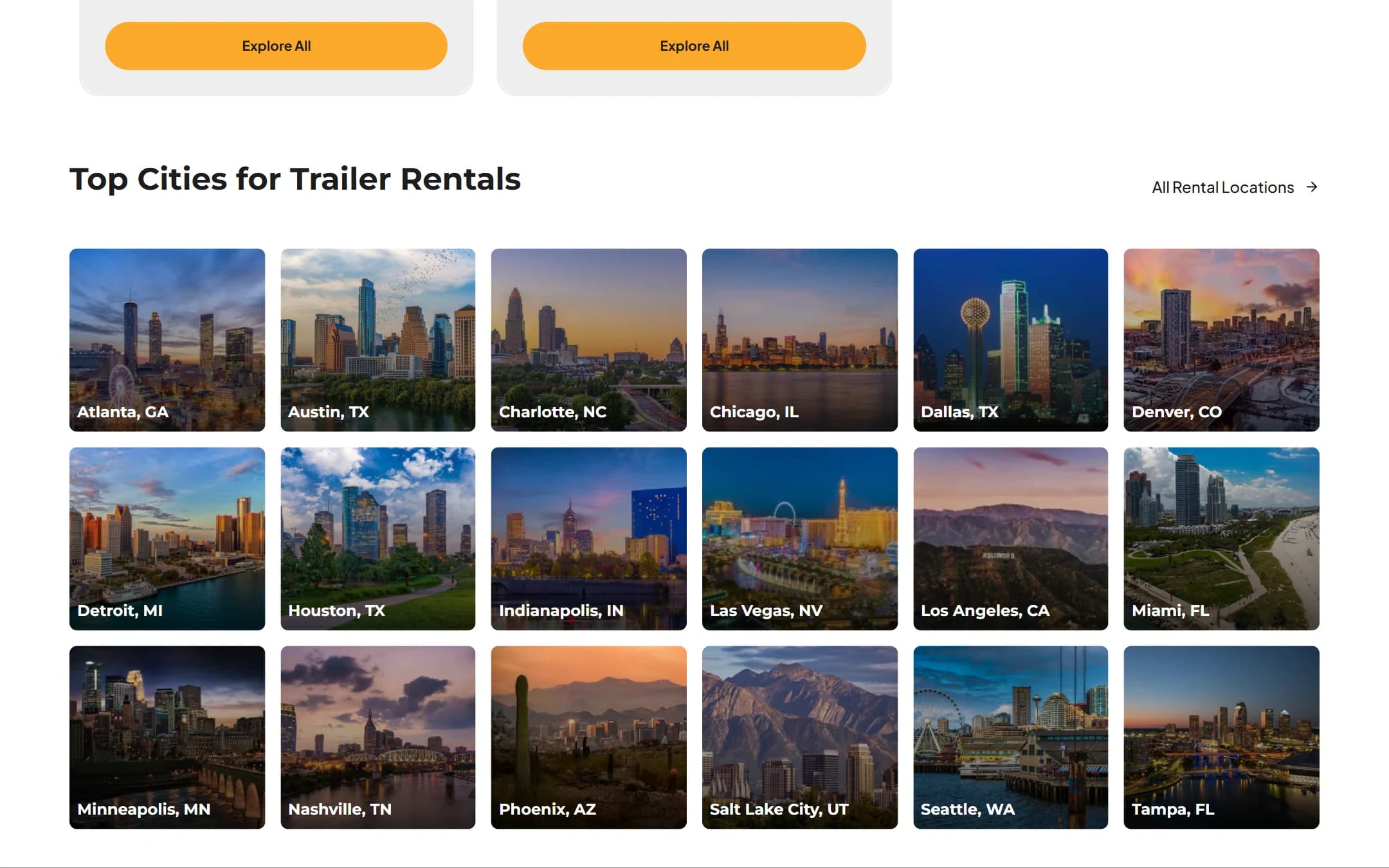
Nearly every rental search names a city and a machine. Big Rentals generates a real page for each of those combinations from one template and the same data that powers the marketplace.
- Role
- Full-stack development, technical SEO
- Type
- Programmatic landing page system
- Scope
- Templates, routing, internal linking, rendering
- Status
- Live and indexing
- City and category pages
- 198
- Template behind them
- 1
- Metros
- 18
- Categories
- 11
Nobody searches for a rental marketplace.
They search for a flatbed trailer rental in San Diego. They search for a dump trailer in Austin. The query almost always contains a place and a thing, and the person typing it is close to the moment of paying.
That is thousands of distinct long-tail searches, each with real intent and low competition, and no marketing team on earth is going to hand-write a page for every one of them. Writing eighteen city pages is a bad week. Writing every city crossed with every trailer type is not a job you can staff.
- Intent lives in queries that name a city and a machine
- Each query is low volume; together they are the channel
- The page count grows multiplicatively, not additively
The URL is the data model.
Every page lives at a path that reads like the question it answers, /locations/us/texas/austin/trailer-rentals, and narrows further to /locations/us/texas/austin/trailer-rentals/dump-trailers. Country, state, city, category. The route is not a slug someone invented; it is the same hierarchy the database already uses to relate a supplier to a place.
That means adding a metro is a data change rather than an engineering task. The city appears, its pages exist, and it slots into the linking graph without anyone touching a template.
- Country, state, city, and category encoded in the path
- Adding a metro publishes its pages automatically
- One template renders every combination
A generated page still has to be worth landing on.
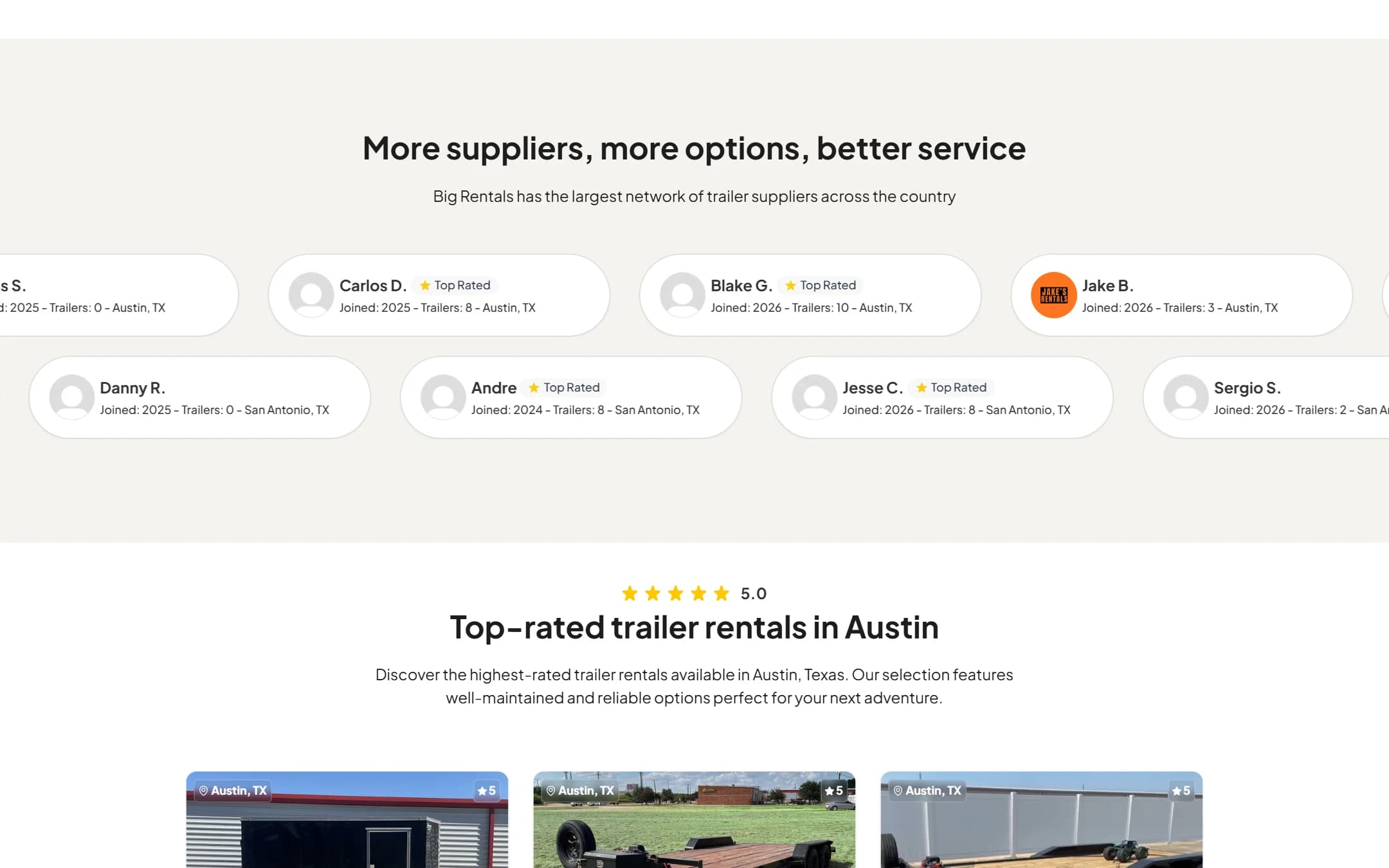
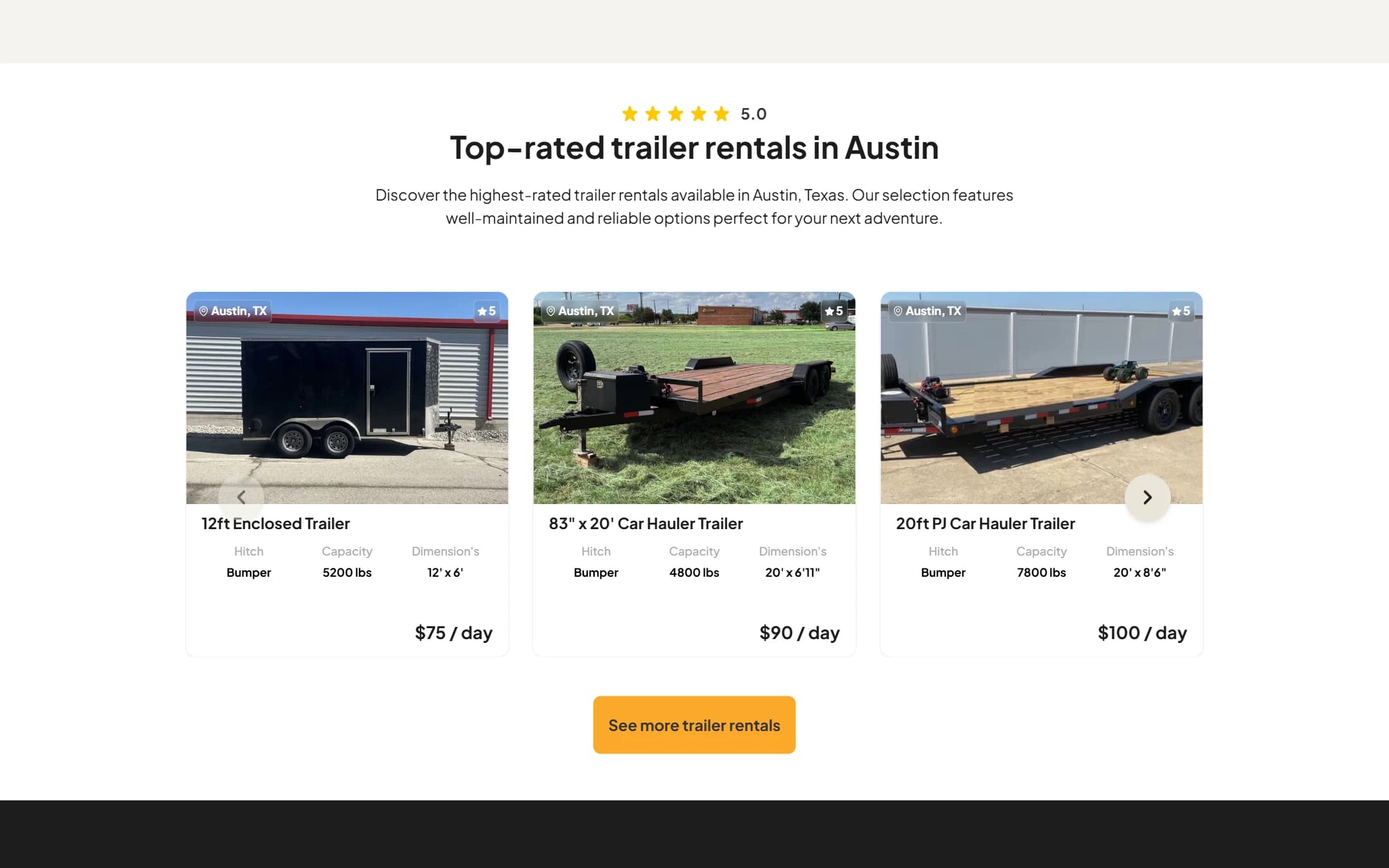
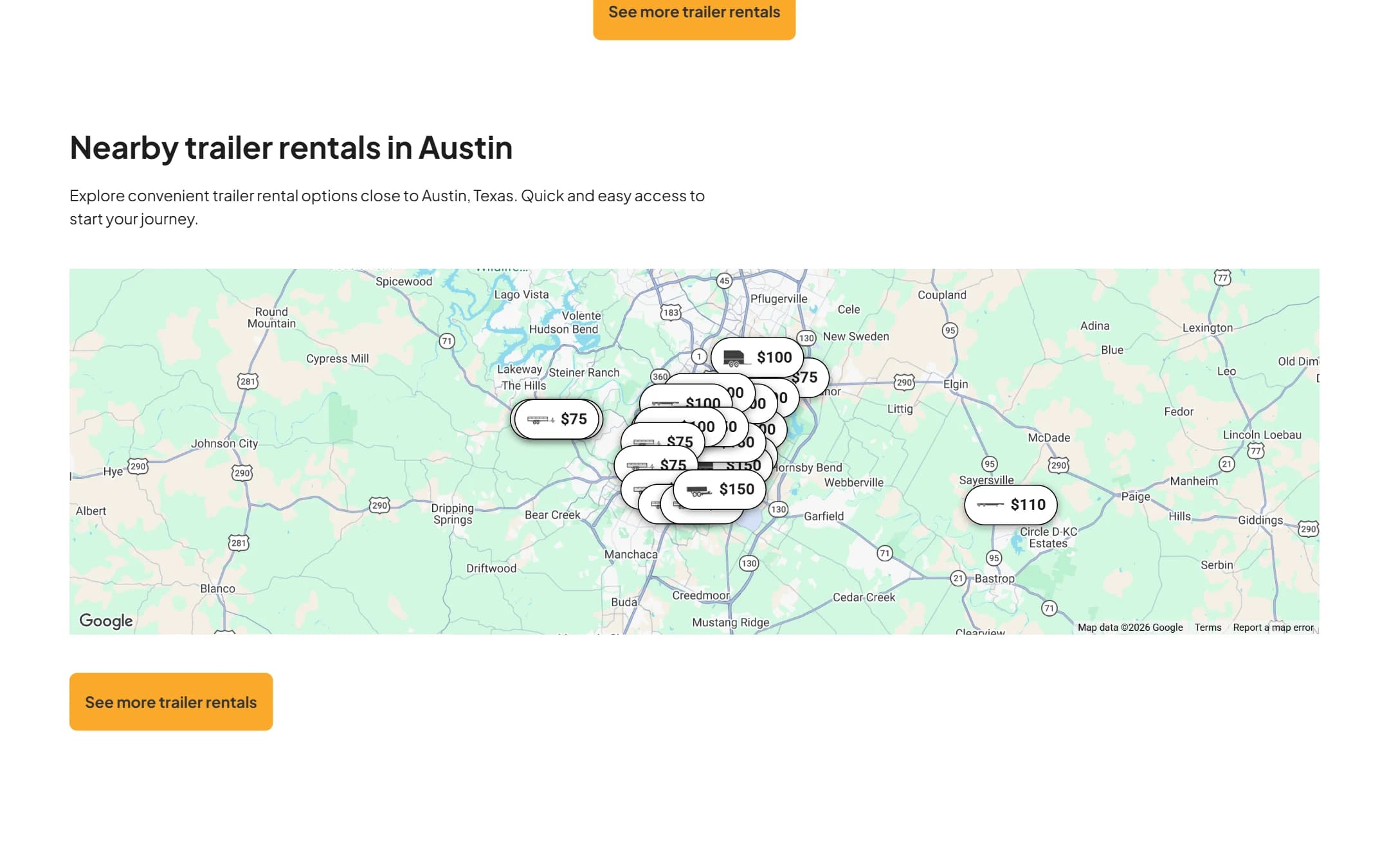
The failure mode of programmatic SEO is a doorway page: the same paragraph with the city name swapped in, which Google has been demoting for years. So each page carries things only that city can supply. The actual trailers currently listed there. Local pricing. Suppliers in that metro. How renting works in that state. Questions specific to that market.
Structure does the rest. Each page emits the right structured data, and the internal linking runs both ways, from a city out to its categories and from a category back across its cities, so crawlers can reach any of the two hundred pages in a couple of hops.
- Real local inventory and pricing on every page
- Structured data emitted per page, not bolted on
- Two-way internal linking between cities and categories
Fast pages are ranking pages.
Two hundred pages that each hit the database on request would be slow for renters and expensive to crawl. They are statically generated and refreshed with incremental regeneration, so a crawler and a customer both get a document that is already built, while inventory stays current.
The same decision serves both audiences, which is the part worth noticing. Static rendering makes the page fast for a contractor on a phone at a job site, and it makes the markup lean and reliably crawlable for a bot. One choice, two problems.
Traffic that compounds.
Eleven categories across eighteen metros is 198 city and category pages, plus the city and category indexes above them, all from one template and the marketplace's own data. Adding a metro adds eleven more pages the same afternoon.
It is leverage rather than effort. The catalogue that makes the marketplace work is the same catalogue that makes the pages worth ranking, so growing one grows the other without anyone writing a word.
What we built it with
Static generation with incremental regeneration, so the same page is cheap to crawl and fast to open on a phone at a job site.
Next.js
TypeScript
PostgreSQL
Prisma
- SSchema.org
Vercel


What shipped
- 198 city and category pages from a single template
- URL hierarchy that mirrors the underlying data model
- Real local inventory, pricing, and suppliers on every page
- Structured data and two-way internal linking throughout
- Static generation with ISR keeping inventory fresh
- New metros publish their full page set on launch
Want results like these?
Book a free 30-minute call. We'll scope your project, recommend the right approach, and tell you honestly if we're the right fit.