

Everything a rental yard runs on, in one place
Most rental operators run on a whiteboard, a spreadsheet, and a phone. HQRent replaces all three with booking, scheduling, payments, contracts, fleet, and reporting under one login.
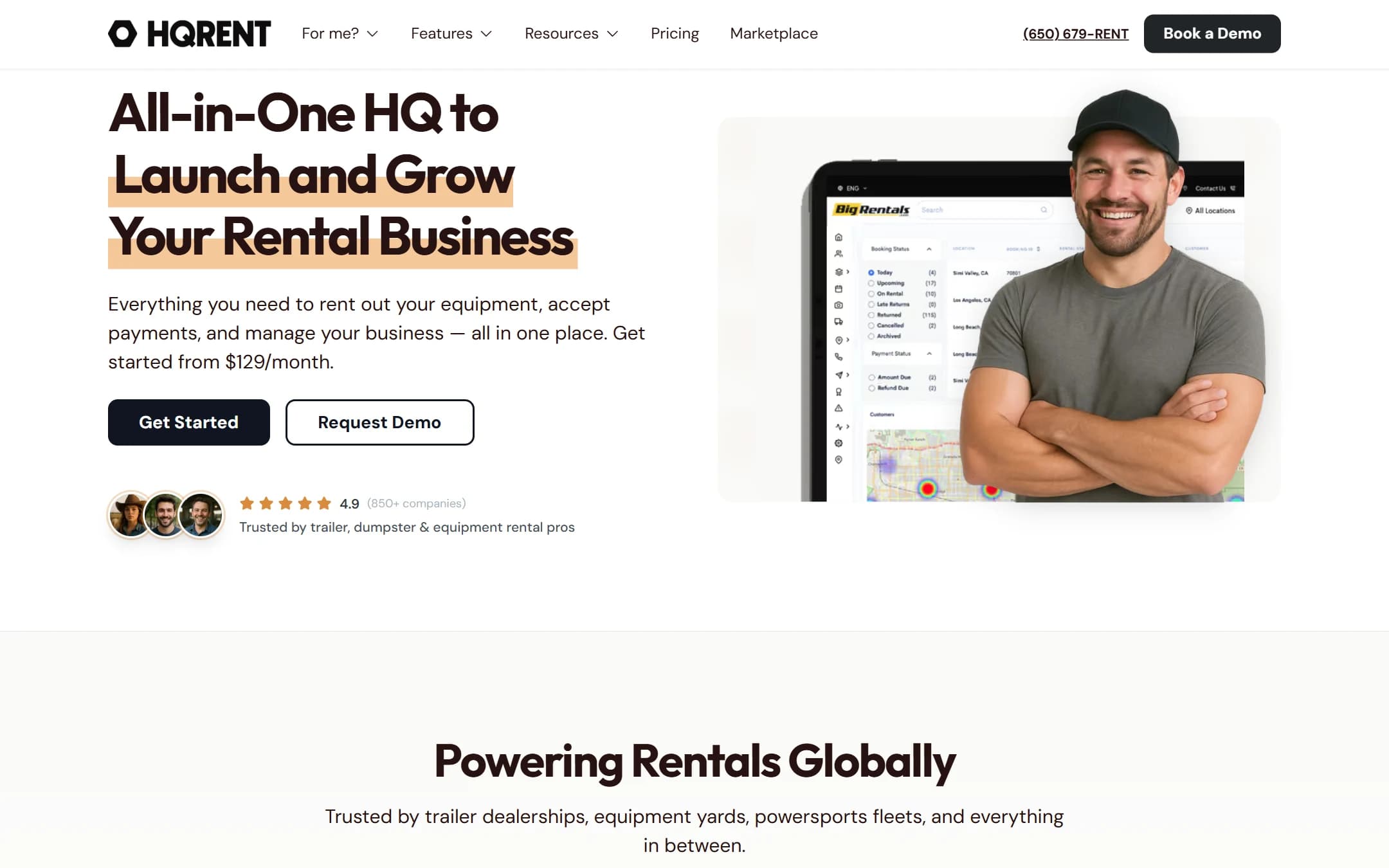
- Role
- Full-stack product development
- Type
- Vertical SaaS for rental operators
- Scope
- Booking, fleet, payments, contracts, reporting
- Status
- Live at hqrent.com
- Core modules
- 7
- Shipped features
- 25+
- Pricing tiers
- 3
- Verticals served
- 3
Generic rental software fits nobody in particular.
A trailer yard, a dumpster hauler, and an equipment dealer all rent things by the day, and the resemblance ends roughly there. Dumpsters get delivered and collected. Trailers need a hitch class and a licence check. Excavators need an inspection before and after. Horizontal booking software handles the calendar and abandons you at everything that actually matters.
So operators end up with a stack: a booking widget that does not know the fleet, a spreadsheet that does, a card reader, a folder of PDF contracts, and a phone that rings when any of them disagree. Every one of those seams is a double booking waiting to happen.
- Rental verticals differ in the details that cause disputes
- Booking, fleet, and payment data living in separate places
- Every handoff between tools is a chance to double-book
The calendar and the fleet have to be the same thing.
HQRent is built around one idea: an asset's availability is not a setting somebody maintains, it is a consequence of everything else. A booking, a scheduled delivery, a maintenance window, or an unreturned unit all make the same trailer unavailable, and they all write to the same record.
Once that holds, the rest stops being separate products. Online booking is a public read of the fleet. Smart scheduling blocks dates the moment a job is committed. Reports are the same data grouped differently rather than a nightly export into somebody's spreadsheet.
- Availability derived from bookings, jobs, and maintenance
- Public booking reads the same fleet record staff edit
- Reporting built on live data, not an overnight export
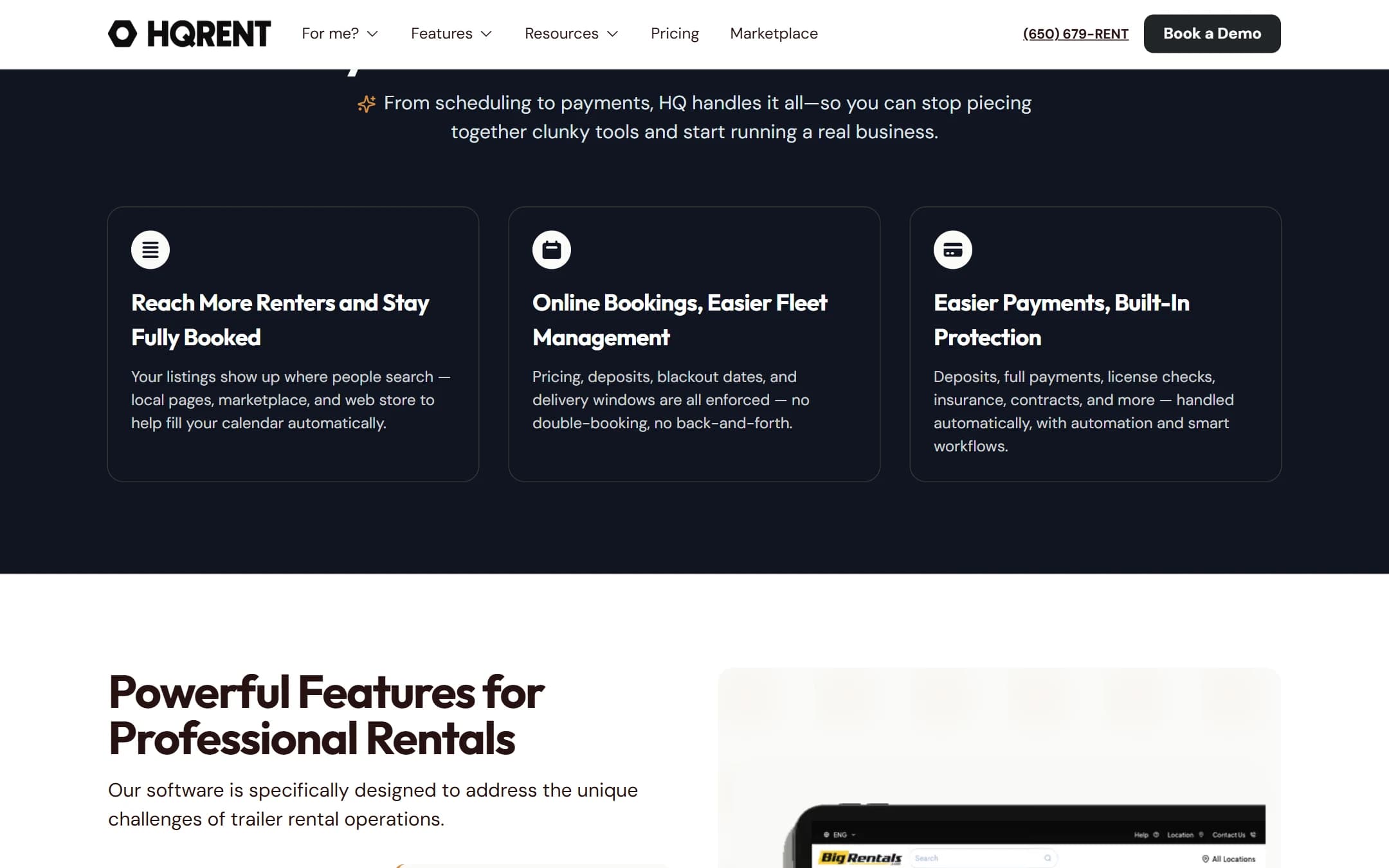
Seven things an operator does before lunch.
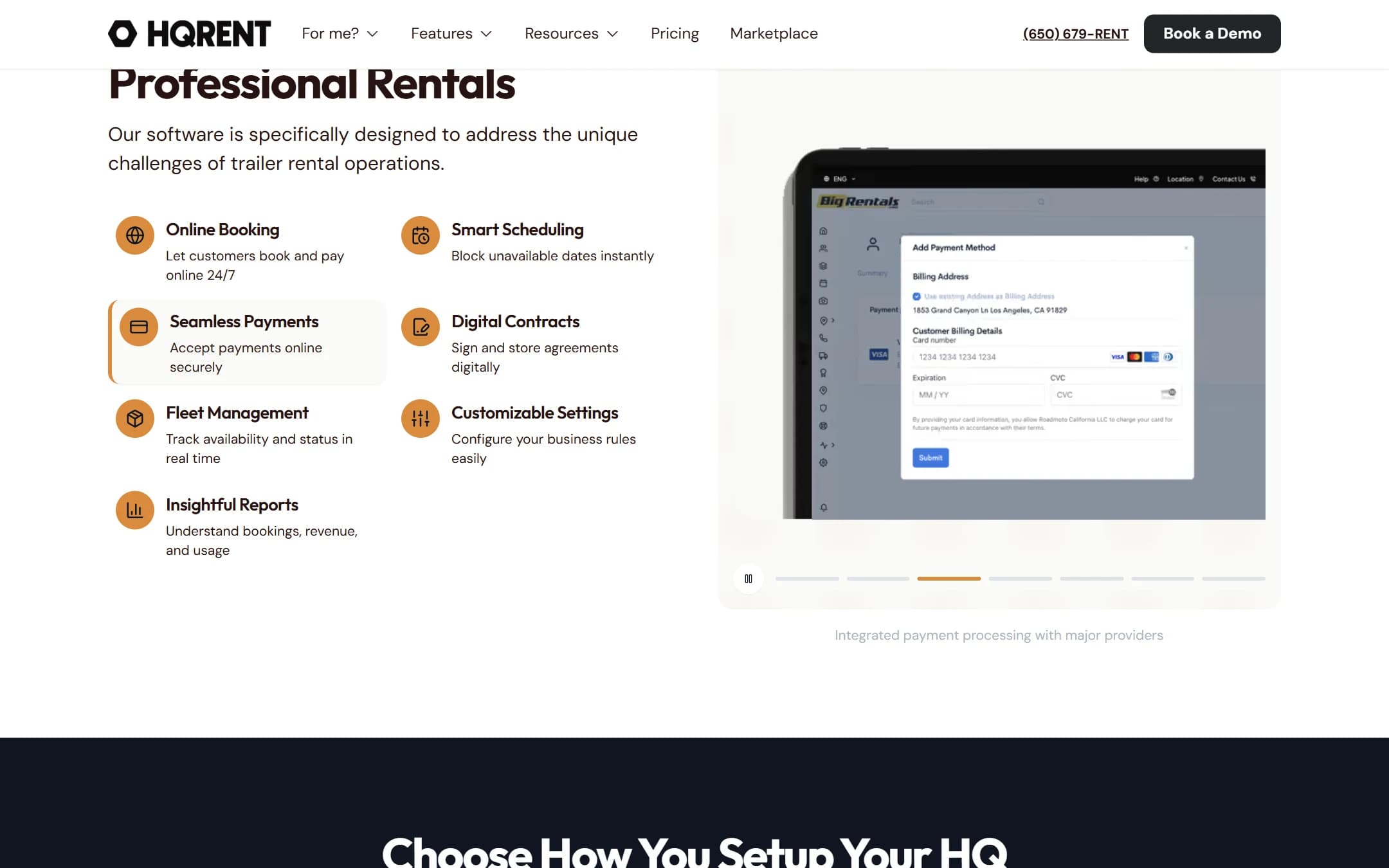
Online booking so customers can reserve and pay at any hour. Smart scheduling that blocks dates the instant something is committed. Payments taken online rather than chased. Digital contracts signed and stored against the booking. Fleet management showing what is out, what is back, and what is due. Configurable business rules, because every yard has its own. Reports on bookings, revenue, and utilisation.
Around those sit the specifics that decide whether software gets adopted: digital inspections, claims, add-ons and services, quotes and invoices, deposits, promotions, review collection, and SMS to the customer whose trailer is due back this afternoon. More than twenty-five features, each one earning its place because an operator asked for it.
- Booking, scheduling, payments, contracts, fleet, settings, reports
- Inspections and claims for the disputes that actually happen
- Quotes, invoices, deposits, promotions, and customer messaging
The question is always where is unit 14.
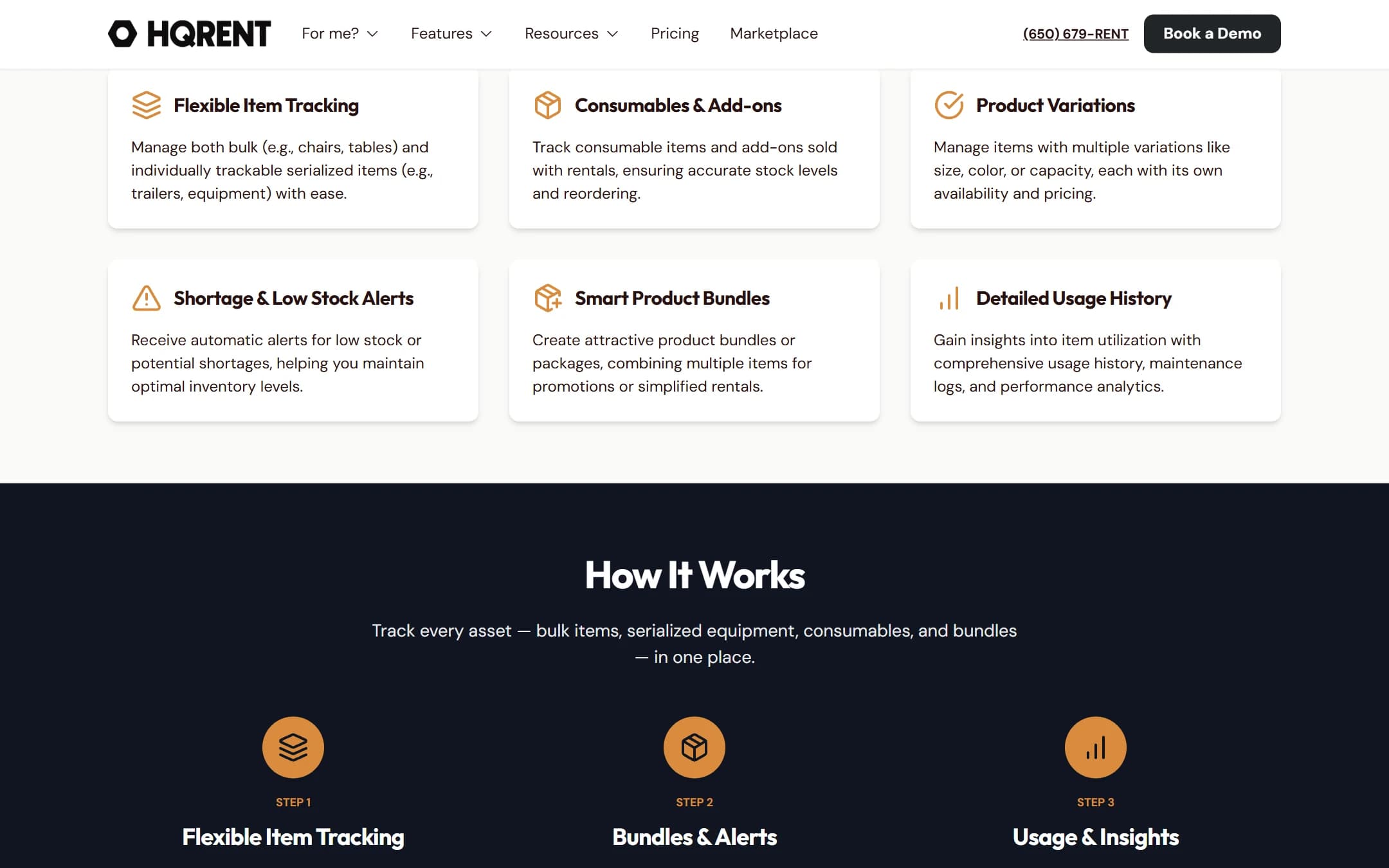
Fleet management is where a rental business is either under control or not. Each asset carries its status, its location, its maintenance history, and its bookings, so the answer to whether something can go out on Friday is a lookup rather than a phone call to the yard.
Utilisation reporting falls out of the same records. An operator can see which units earn and which sit, which is the number that decides what to buy next and what to sell.
Priced for a two-trailer yard and a hundred-unit fleet.
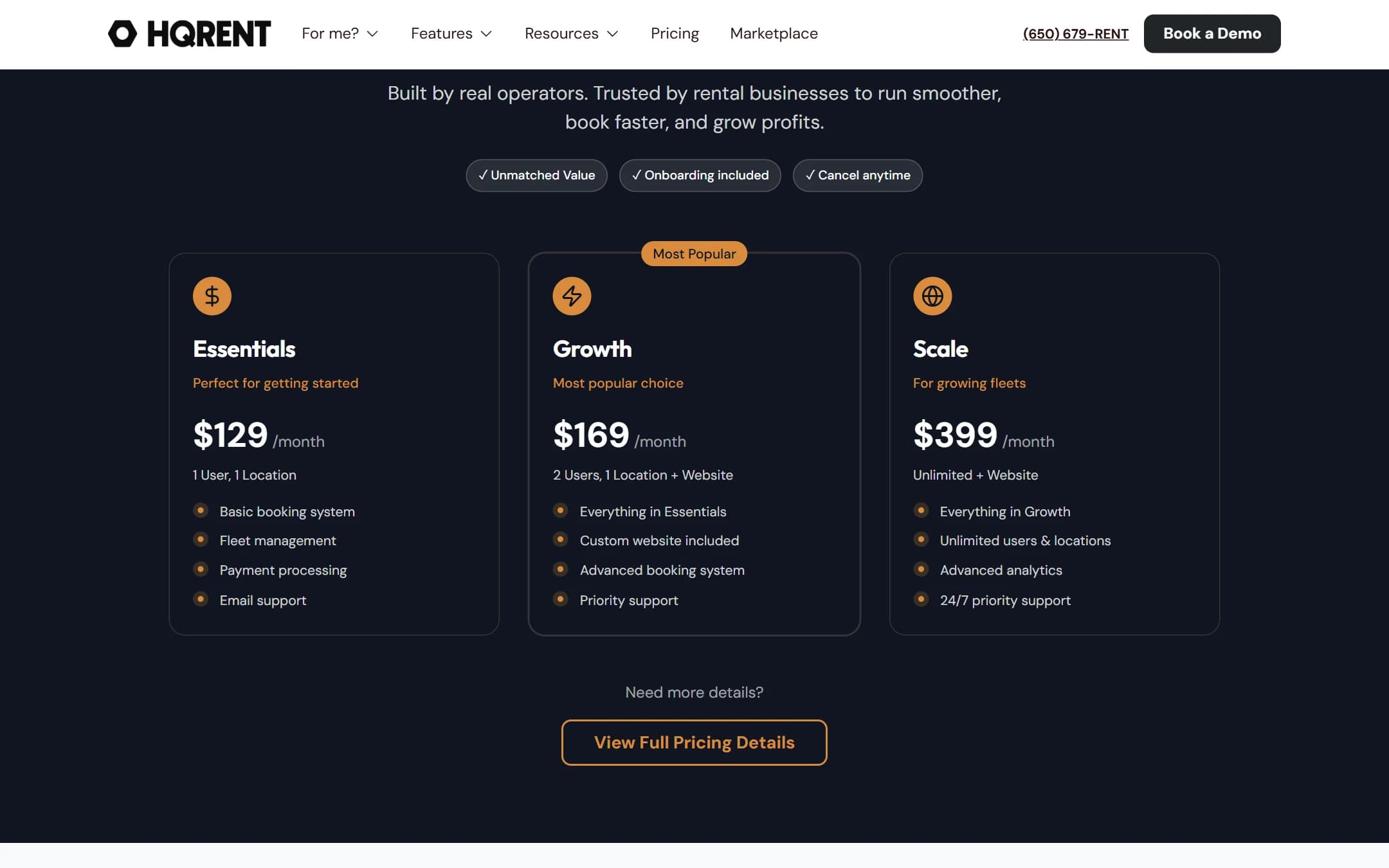
Three tiers, Essentials, Growth, and Scale, so an owner with two trailers is not paying for a dispatch team they do not have. The entry tier has to be genuinely usable, because the customer who starts with two units is the one who has fifty in three years.
The same platform is presented through three vertical front doors, trailer rental software, equipment rental software, and dumpster rental software, each speaking the language of that trade. One product underneath, three conversations.
Built for rentals, by people who have run one.
HQRent runs the whole operation from booking through return, for trailer yards, equipment dealers, and dumpster haulers, on a plan that matches the size of the business.
The measure of it is not the feature count. It is that an operator can stop keeping the real schedule in their head, because the software finally knows what they know.
What we built it with
Production-proven tools chosen for performance, developer velocity, and long-term maintainability.
Next.js
TypeScript
PostgreSQL
Prisma
Stripe
Tailwind CSS
- TTwilio
Vercel


What shipped
- Availability derived from bookings, jobs, and maintenance in one record
- Seven core modules covering booking through return
- 25+ features including inspections, claims, quotes, and deposits
- Fleet status and utilisation reporting from live data
- Three tiers so a two-unit yard and a large fleet both fit
- Three vertical front doors over one platform
Want results like these?
Book a free 30-minute call. We'll scope your project, recommend the right approach, and tell you honestly if we're the right fit.