

A marketplace and a SaaS that make each other more valuable
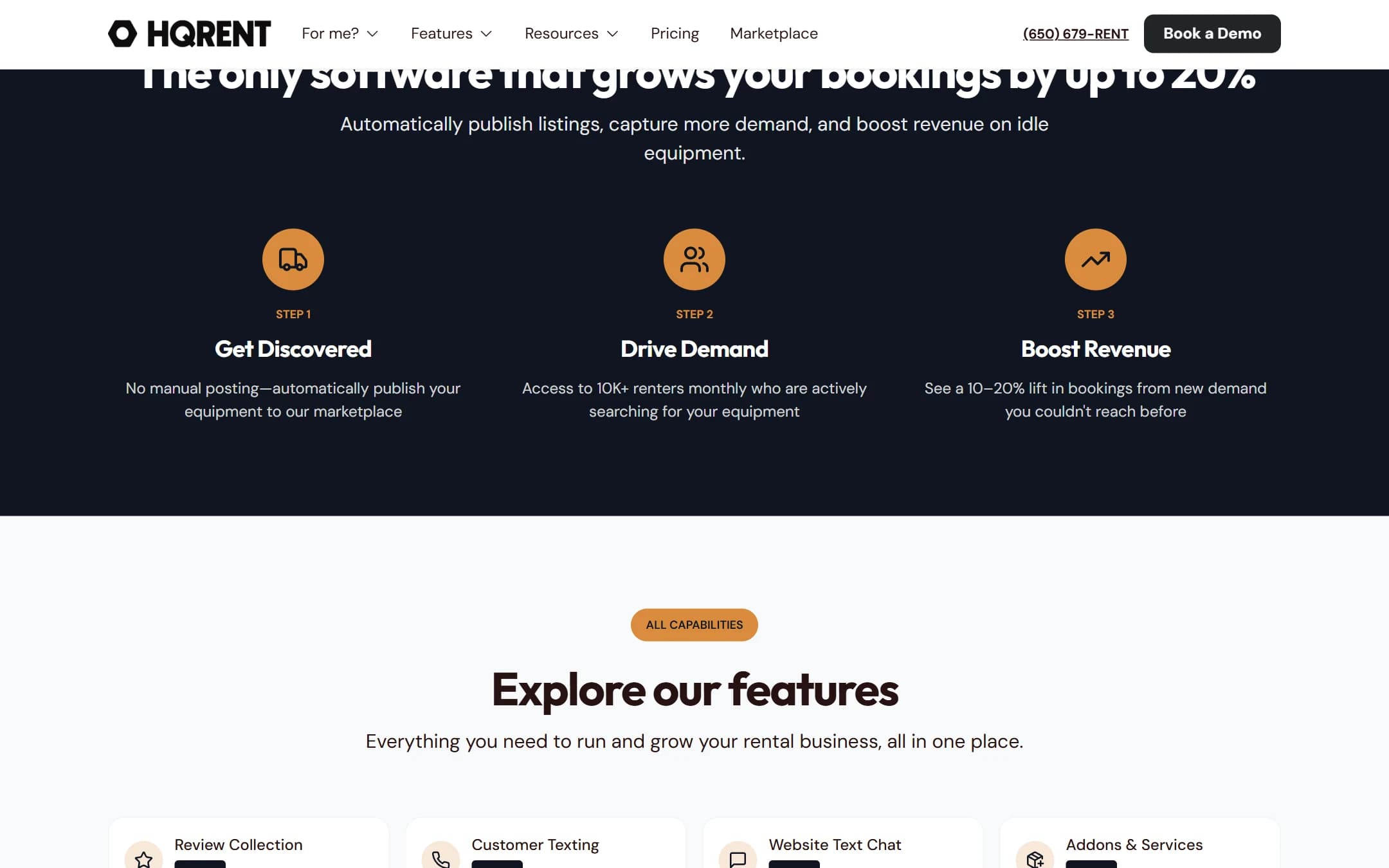
Big Rentals needs supply. HQRent's customers have idle equipment. Publishing one to the other turned two products that compete for the same buyer into a loop where each one feeds the other.
- Role
- Product strategy and development
- Type
- Two products, one account model
- Scope
- Listing sync, supplier onboarding, shared checkout
- Status
- Live across both products
- Renters searching monthly
- 10k+
- Reported lift in bookings
- 10-20%
- Products, one inventory
- 2
- To list on the marketplace
- $0
Both products were chasing the same person.
The marketplace needed suppliers. The software needed customers. Both were knocking on the door of the same equipment owner, with two pitches that sounded like competing asks for the same yard's attention.
There is also a real asymmetry underneath. Someone with two trailers does not want to buy fleet software; they want bookings. Someone with eighty units does not want to be one listing among many; they want their own storefront and their own rules. Selling one product to both was always going to lose one of them.
- Two products, one target customer, two competing pitches
- Small owners want demand, not administration
- Large fleets want control, not a listing
Two doors, and neither one is wrong.
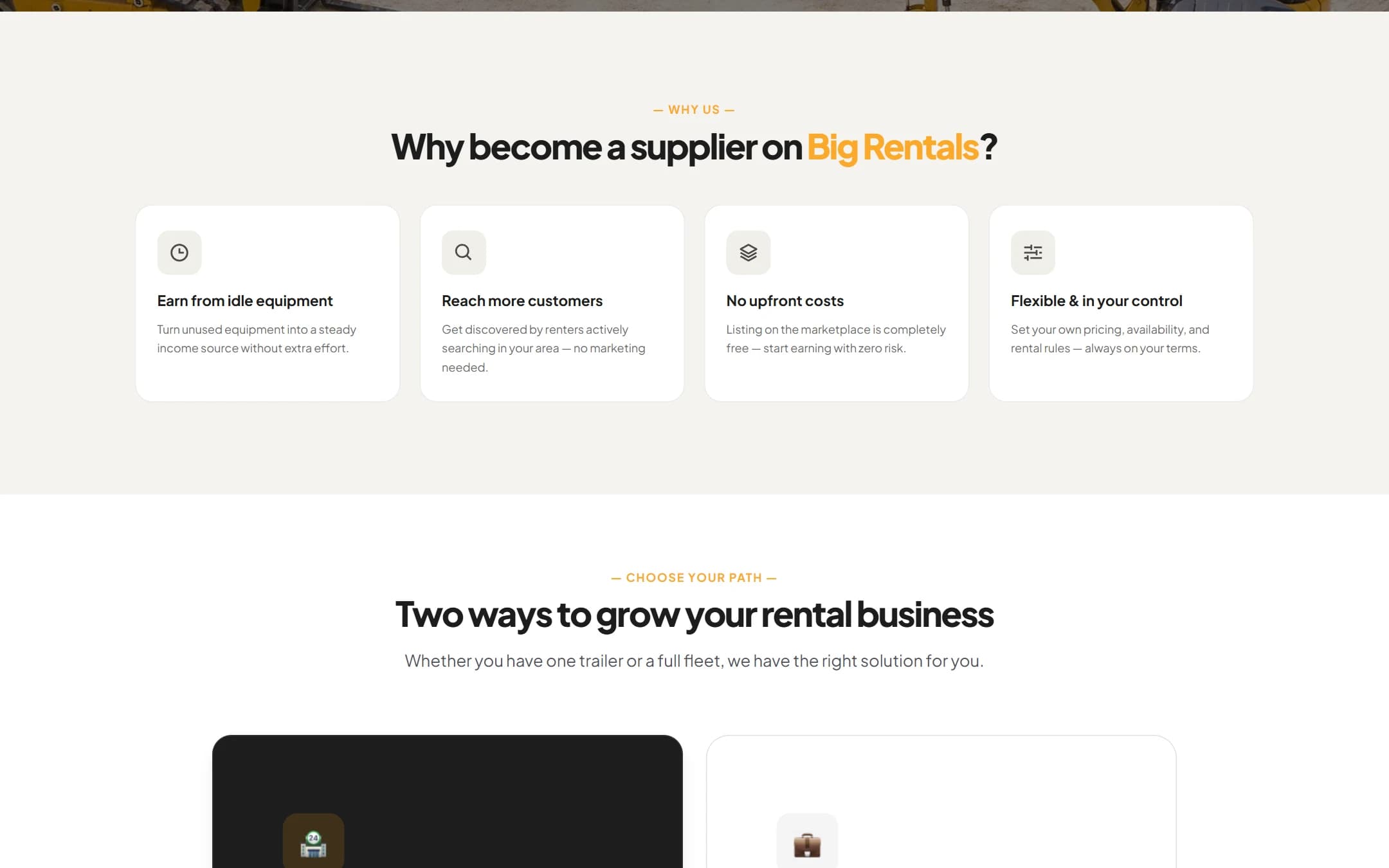
The supplier page now asks a single question and routes on the answer. List on the marketplace, free, no setup and no monthly fee, and get discovered by renters who are already searching. Or buy the software and run your own platform with full fleet management, custom branding, and white-label booking.
Framing them as a choice rather than a funnel did something useful: it stopped the small owner bouncing off a pricing page they were never going to buy from, and it stopped the large operator being offered a listing when they wanted a system.
- Free listing for independent owners and small fleets
- Full platform for operations that need their own front end
- One page, one question, two honest answers
Software customers become marketplace supply, automatically.
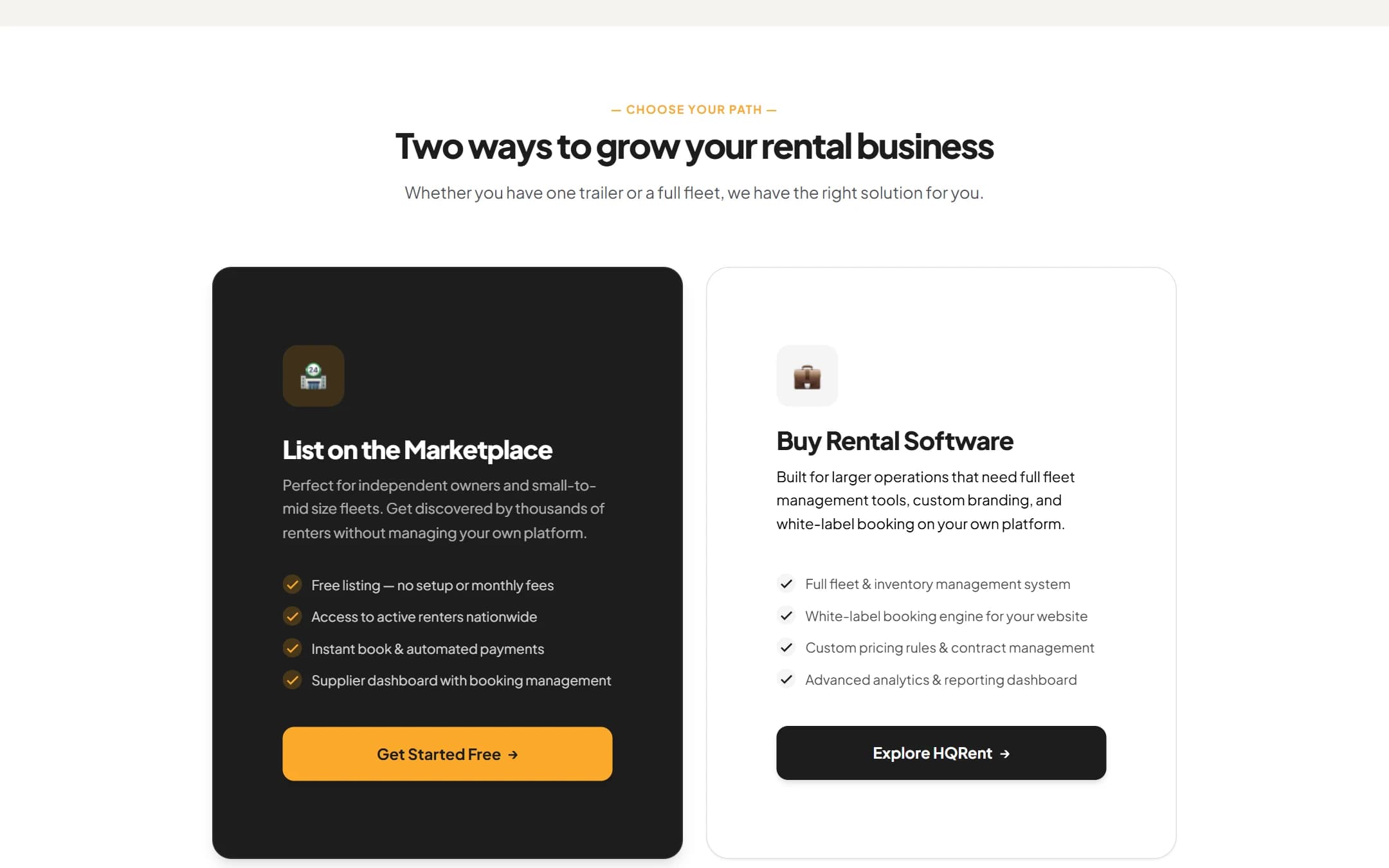
An HQRent customer's equipment publishes to the marketplace without anyone re-entering it. No second listing to maintain, no separate calendar, no photographs uploaded twice. The fleet they already manage becomes inventory renters can find.
That closes the loop in both directions. The marketplace gains real supply in more metros, which makes its city pages worth ranking, which brings more renters. Those renters reach operators who would never have been found by someone searching for a dump trailer in Austin. HQRent puts the reported lift at ten to twenty percent of bookings from demand its customers could not previously reach.
- Listings publish from the fleet, with no manual re-entry
- One calendar, so marketplace bookings block the operator's own site
- More supply improves the SEO surface, which returns more renters
It only works because there is one system underneath.
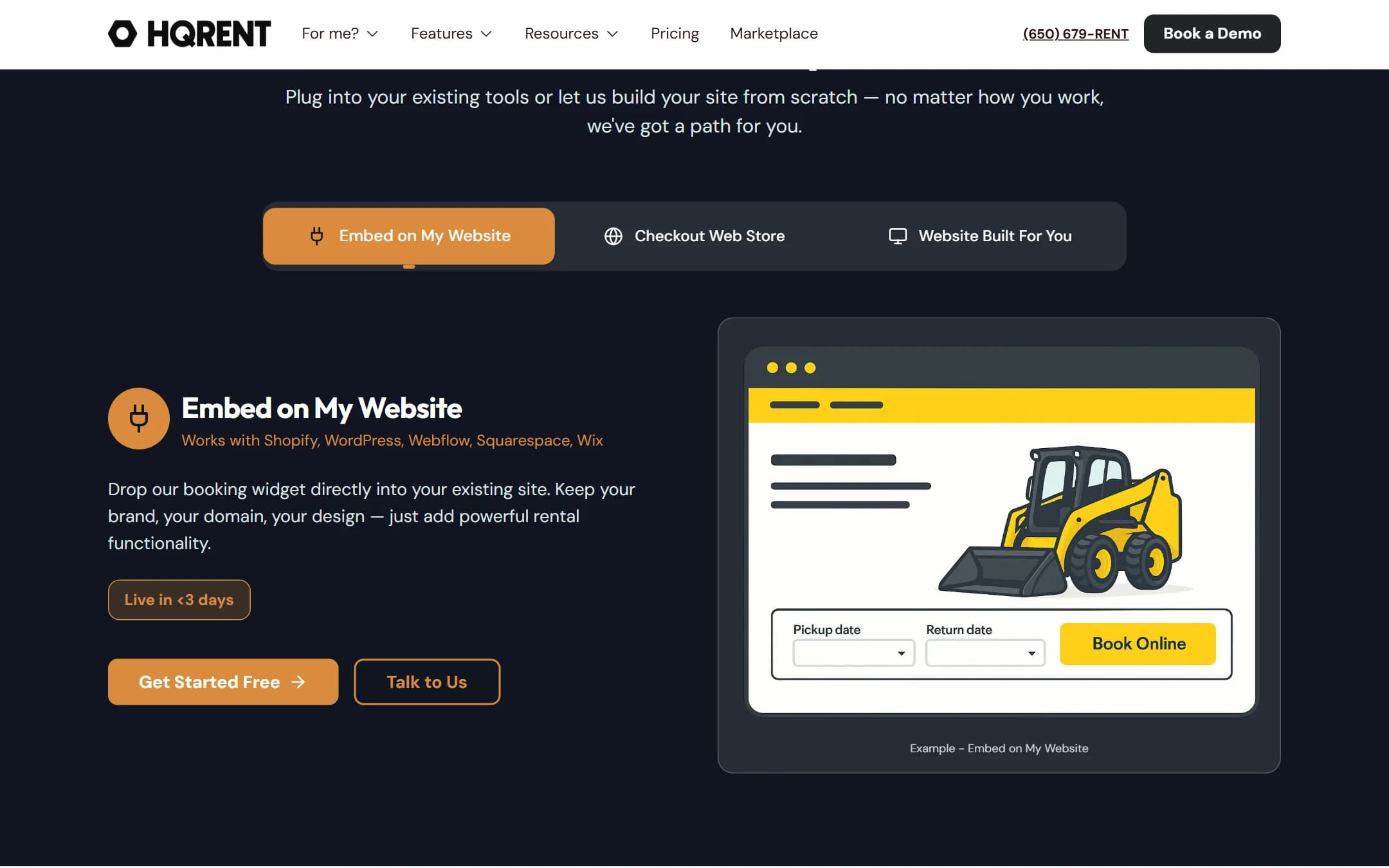
A partnership between two separate products would need an integration, a sync job, and a reconciliation process for when they disagree. Because the marketplace and the platform share the same inventory model and the same checkout, there is nothing to reconcile.
An asset is available or it is not, and both front ends are reading the same answer. That is also why an operator can be on both at once without the double-booking risk that normally makes people pick one channel and stay there.
Each product is worth more because the other exists.
Big Rentals gets supply that would have taken years of individual sales calls to assemble. HQRent gets a growth argument no standalone rental software can make, because it does not just help you run the business, it brings you demand.
The customer chooses a door, and the company wins either way. That is the whole strategy, and it only stands up because the two products were built on the same foundation rather than integrated after the fact.
What we built it with
One inventory model and one checkout serving both products, which is what removes the sync layer a partnership would have needed.
Next.js
TypeScript
PostgreSQL
Prisma
Stripe
Vercel


What shipped
- Supplier acquisition split into two honest paths
- Free marketplace listing for independent owners
- HQRent fleets publishing to the marketplace automatically
- Shared calendar removing cross-channel double-booking
- Reported 10-20% booking lift from marketplace demand
- Growth argument no standalone rental software can make
Want results like these?
Book a free 30-minute call. We'll scope your project, recommend the right approach, and tell you honestly if we're the right fit.