

Every page, scored and explained by AI
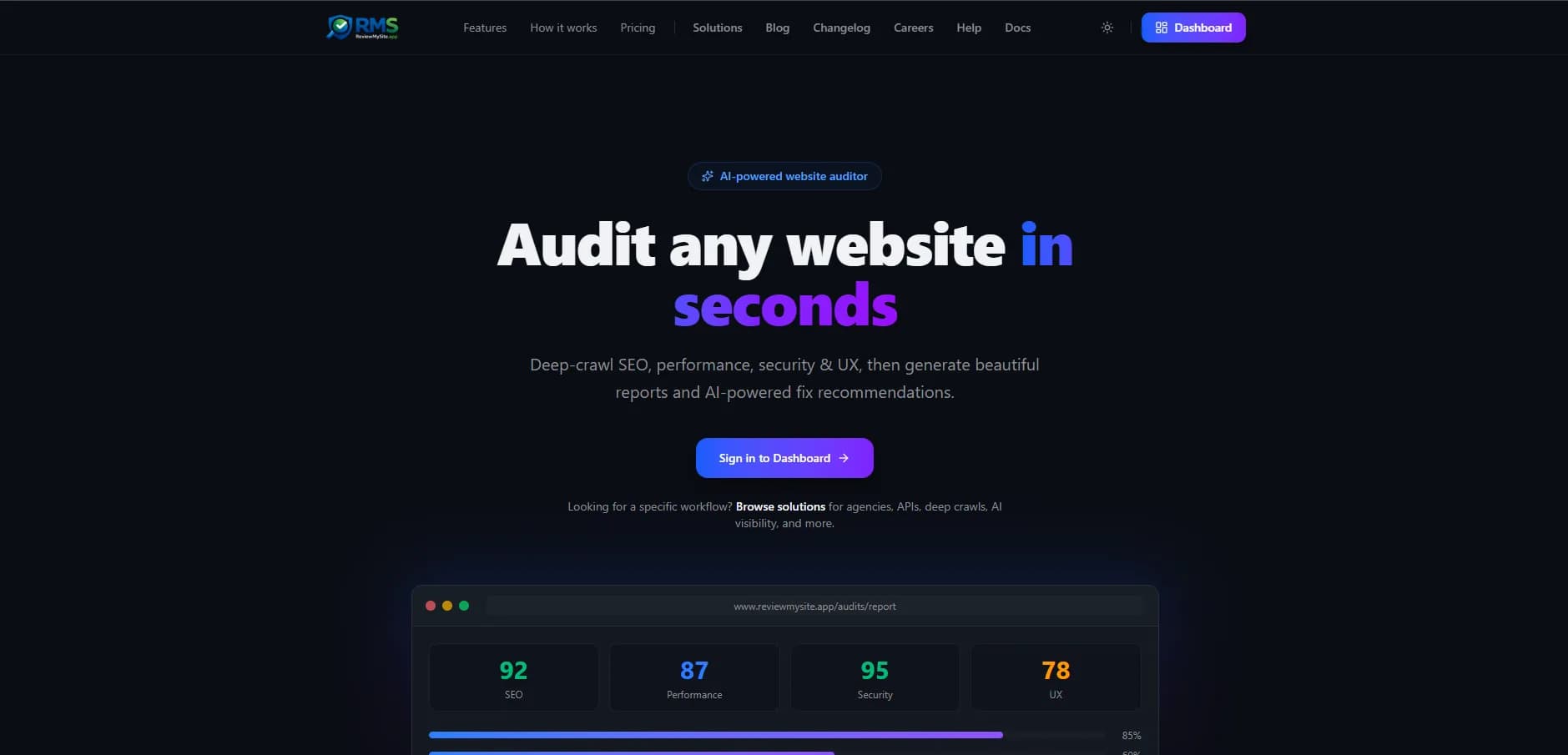
A platform that crawls an entire website and grades it across SEO, performance, security, UX, AI visibility, and brand health, then turns the raw findings into a prioritised, plain-English plan of what to fix first.
- Role
- AI specialist, full-stack engineering
- Type
- SaaS platform
- Scope
- Crawler, scoring, reporting, outreach
- Status
- Live at reviewmysite.app
- Scoring dimensions
- 6
- Pages per crawl
- 20+
- URL to action plan
- ~17 min
- Score per dimension
- 0-100
Audit tools check one thing and dump a wall of metrics.
Most audit tools are single-purpose. One checks your meta tags, another times your page loads, a third scans your headers. Each hands back a column of numbers and leaves you to work out which of them actually matter.
None of them explain anything. A score of 43 tells you nothing about why it is 43, what it costs you, or which of the fourteen findings to fix first. And as language models increasingly cite web sources, there is now a dimension nobody was measuring at all: whether your content is legible enough to be quoted.
- Coverage split across several disconnected tools
- Findings reported as numbers, not as decisions
- No visibility into how a site reads to an LLM
A headless browser that walks the whole site.
The crawler drives a real headless browser through Playwright, so JavaScript-rendered content is measured the way a visitor actually receives it rather than as raw source. For each page it records status, load time, transferred size, and resource count.
Crawls run as background jobs on Celery and persist to PostgreSQL, so a long audit never blocks the interface and every result stays comparable against the last run.
- Full page rendering, so client-side content is not missed
- Per-page status, timing, weight, and resource counts
- Background workers, so audits scale past a single request
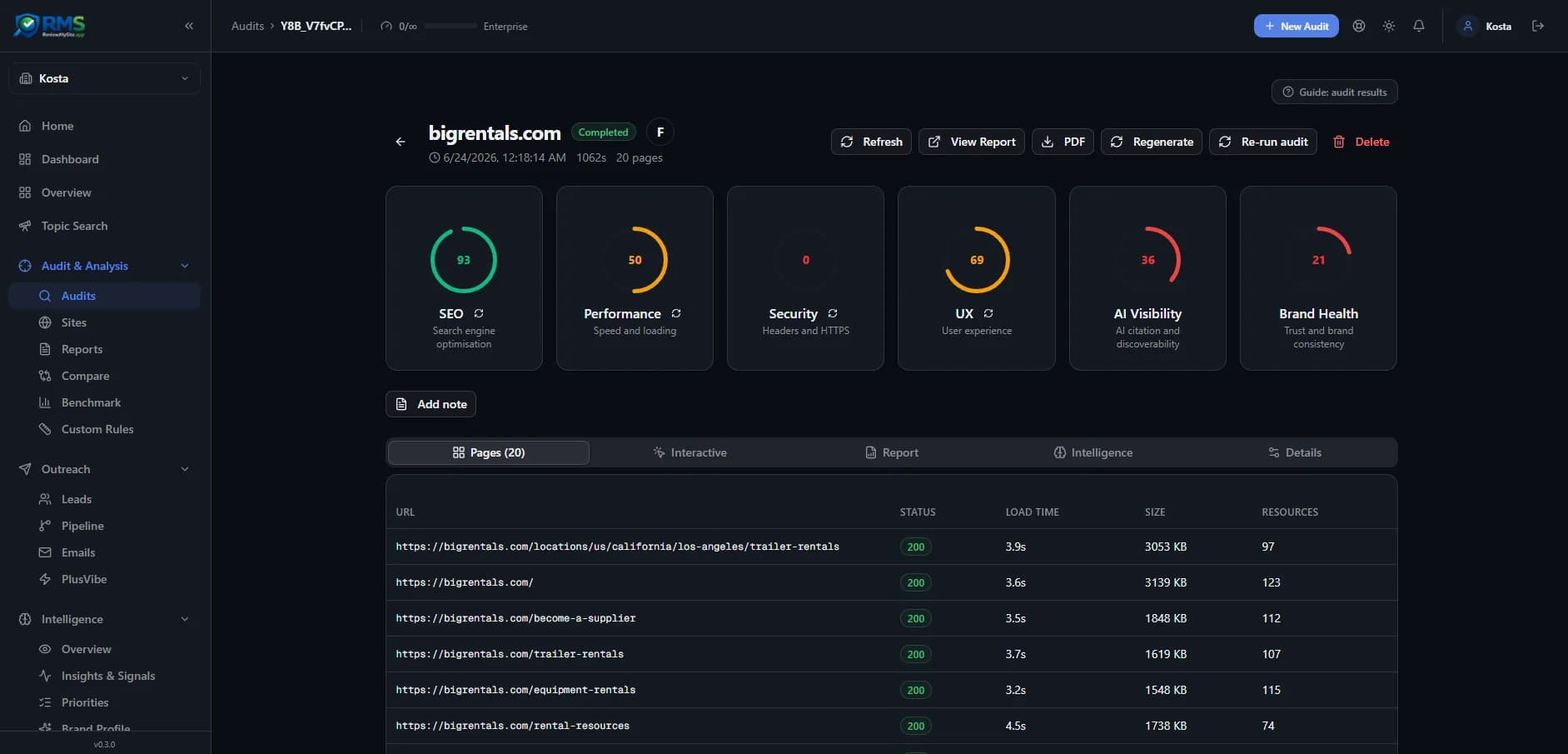
One crawl, six scores, and findings that explain themselves.
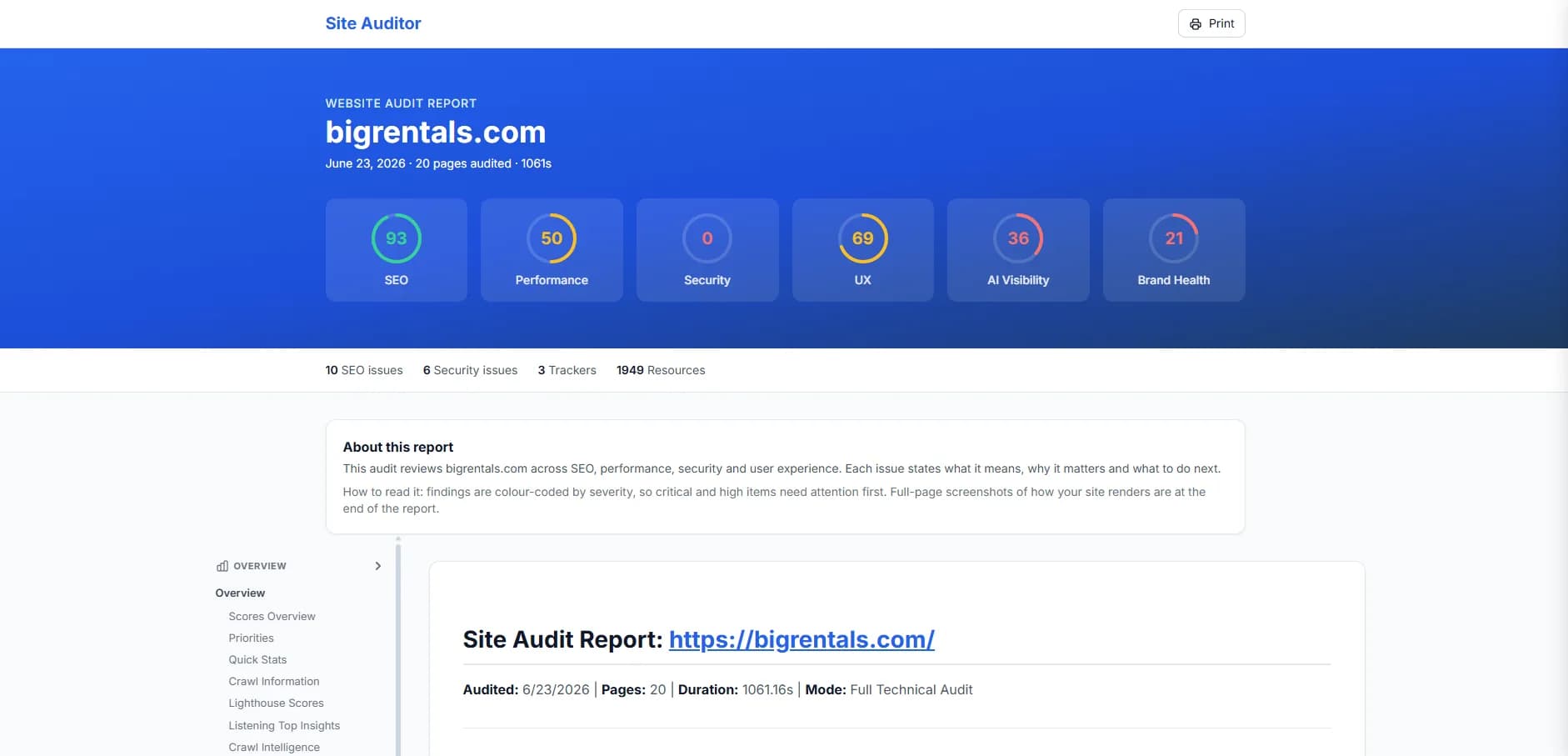
A single crawl feeds six independent scores. SEO covers meta tags, heading structure, canonical signals, sitemap and robots, and crawlability. Performance runs on Lighthouse. Security checks HTTPS, headers, and exposed resources. UX reads Core Web Vitals and accessibility signals. AI visibility measures how citable the content is. Brand health looks at trust and consistency.
The differentiator sits on top: an LLM layer turns those findings into a prioritised report in plain English. Every issue states what it means, why it matters, and what to do next, ordered so the highest-impact fixes come first.
- Six dimensions scored independently from one crawl
- Findings colour-coded by severity, critical items surfaced first
- Shareable report with full-page renders of how the site looks
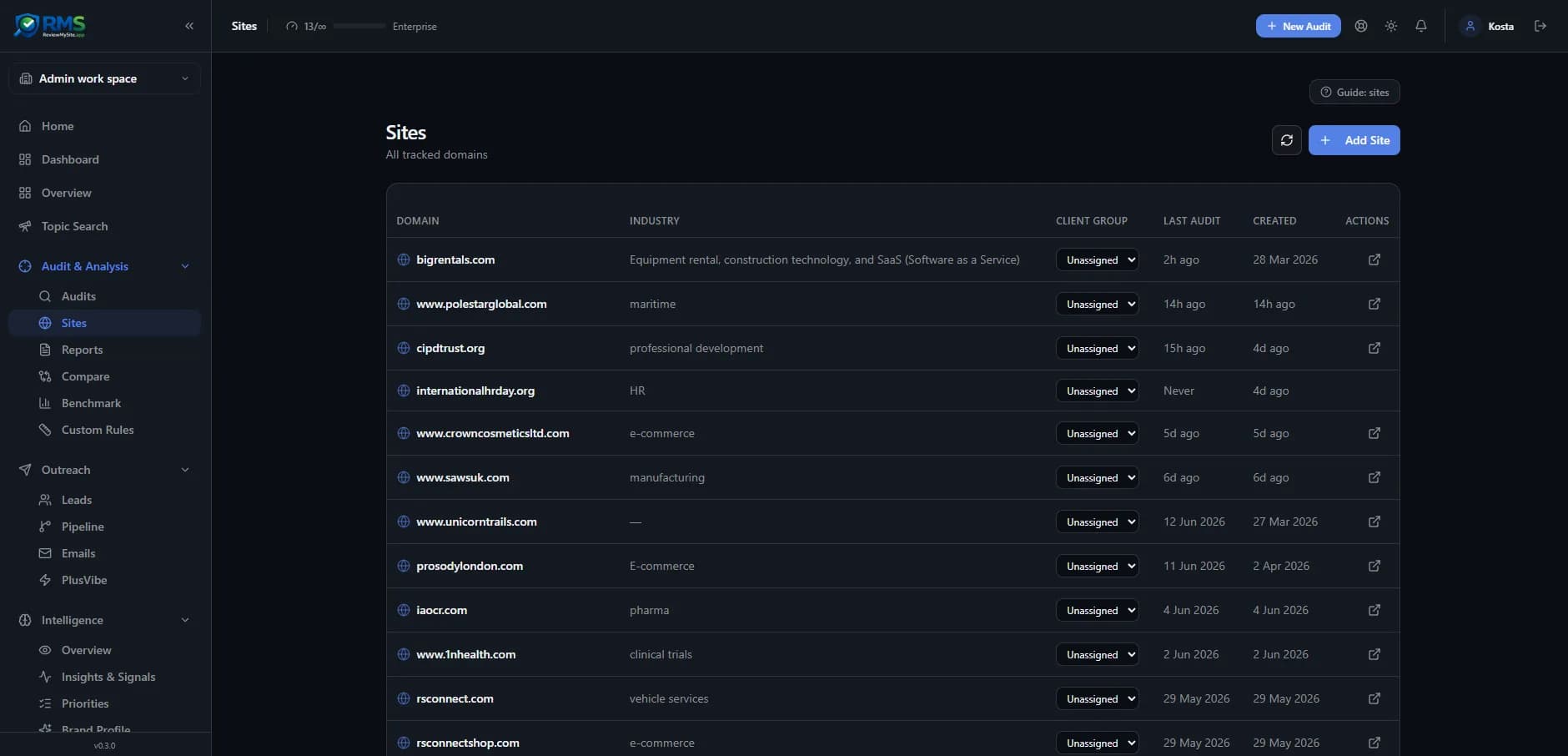
An audit is the start of a conversation, not a PDF.
Sites are tracked as a portfolio rather than as one-off runs. Each domain carries its industry, its client group, its last audit, and its history, so change over time is visible instead of being re-measured from zero every quarter.
That portfolio then feeds the outreach side of the product: leads and pipeline, recurring insights, brand profiles, and generated email that references what the audit actually found rather than a template.
From URL to action plan in about 17 minutes.
A single input produces a full technical crawl, six independent scores, and an explained, prioritised set of recommendations, with no interpretation work left to the reader.
It is the difference between a tool that tells you your site scored 50, and one that tells you which three changes will move it.
What we built it with
Production-proven tools chosen for performance, developer velocity, and long-term maintainability.
Python
FastAPI
- PwPlaywright
Celery
PostgreSQL
React
- AILLM APIs
- LHLighthouse
What shipped
- Playwright crawler that renders JavaScript before measuring
- Six independent scores produced from a single crawl
- AI layer that explains and prioritises every finding
- Shareable, printable reports with per-page evidence
- Portfolio tracking with industry, history, and client grouping
- Outreach pipeline built on real audit findings, not templates
Want results like these?
Book a free 30-minute call. We'll scope your project, recommend the right approach, and tell you honestly if we're the right fit.